What Makes a Property Development Potential in East Auckland?
One of the most common questions I get asked is simple: "Lawrence, how do I know if a property has development potential?" It sounds straightforward — but the honest answer is that it takes experience, local knowledge, and a clear understanding of Auckland's planning rules. Let me walk you through what I look for.
Zoning is the Foundation of Everything
The first thing any developer or savvy buyer must check is the Auckland Unitary Plan (AUP) zoning. It is the single planning document governing all development across Auckland, and your property's zone determines what you are allowed to build — before any other consideration comes into play.
For residential land in East Auckland, the key zones you'll encounter are:
Mixed Housing Suburban (MHS)
Typically two storeys. Permits more than one dwelling but at lower intensity. Common in older Pakuranga and Howick streets.
Mixed Housing Urban (MHU)
Up to three storeys. Encourages terraced housing and higher density. Increasingly common near town centres and transport links.
THAB Zone
Terrace Housing & Apartment Buildings. Up to 6–7 storeys. Found closest to metropolitan centres and rapid transit corridors.
Single House Zone
Generally one dwelling per site with strict density controls. Often applies in areas protected by special character overlays.
Under recent central government directives, most of Auckland's suburban areas are being progressively rezoned to enable at least three storeys as of right — meaning even properties that were once Single House or MHS are gaining significant new potential.
"In my experience, many owners are sitting on land zoned for three or more dwellings and simply don't know it. Zoning is the first unlock — everything else follows."
Site Size, Shape & Gradient Matter More Than You Think
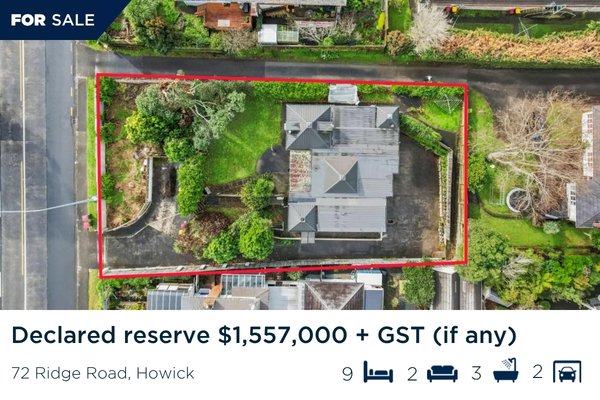
Zoning tells you what's allowed, but the physical characteristics of a site determine what's actually viable. Not all sections are created equal. In East Auckland, where topography varies significantly between coastal Howick, the flats of Pakuranga, and the hillier parts of Dannemora and Flat Bush, site geometry plays a huge role in developer appetite.
Key Site Factors I Assess
- Land area: Larger flat sites (600m² and above in MHU zones) open the door to multiple dwellings or terraced housing.
- Frontage width: Narrow sites restrict access options and reduce yield. Wide frontage unlocks multiple driveway crossings.
- Regular shape: Irregular or pie-shaped sections complicate building footprints and can reduce net developable area.
- Gradient: Steeper sites increase earthworks and retaining costs, which eats into feasibility margins fast.
- Orientation: North-facing sites command premium pricing on completed townhouses and attract quality buyers.
- Existing improvements: An older, lower-value dwelling is easier and cheaper to demolish than a well-maintained renovated home.
Proximity to Transport, Centres & Services
East Auckland's development landscape has been transformed by infrastructure investment. Properties within walkable catchments of transport corridors, town centres, and key amenities attract stronger zoning uplift under the National Policy Statement on Urban Development (NPS-UD), and they command significantly higher end values for completed townhouses and apartments.
In practical terms, this means proximity to Pakuranga Road, Ti Rakau Drive, Botany Town Centre, Highland Park, Howick Village, and future bus rapid transit connections. The closer a site is to these nodes, the greater the probability of favourable zoning and the stronger the demand for finished product.
East Auckland Demand Drivers
- Strong population growth — the Howick local board area is home to over 130,000 people and continues to expand
- Flat Bush and surrounding areas are among Auckland's fastest-growing new communities
- High demand from multi-generational Asian families seeking large new homes or multi-unit sites
- Good school zones (Howick College, Botany Downs Secondary, Pakuranga College) sustain long-term buyer demand
- Kāinga Ora actively building density across Pakuranga, signalling long-term confidence in the area
Infrastructure Capacity: The Hidden Constraint
One factor that buyers and even some developers overlook is infrastructure capacity — specifically water, stormwater, and wastewater connections. Auckland's rapid intensification has placed real pressure on existing networks, and some streets simply cannot support the additional load a multi-unit development would generate without costly upgrades.
Before committing to a site, I always recommend checking with Watercare and Auckland Council's engineering teams to understand what infrastructure is available at the boundary. A site that looks excellent on paper can have its feasibility significantly undermined by a requirement to extend services 200 metres down the road.
"Infrastructure is often the silent deal-breaker. I've seen developers get all the way to resource consent before discovering the wastewater line can't support their design. Always check early."
Overlays, Covenants & Other Constraints
Even an ideally zoned, perfectly sized site can have its development potential restricted by what the AUP calls "overlays" — additional layers of protection that sit on top of base zoning. Common examples include flood-plain overlays, overland flow paths, heritage character areas, and volcanic viewshafts. Covenants registered on a title can also limit what is built.
These constraints don't necessarily kill development potential, but they must be identified early and factored into your due diligence. In many parts of East Auckland, stormwater management is a particular design consideration given the area's creek networks and low-lying coastal terrain.
The Developer's Feasibility Test
Ultimately, development potential is not just a planning question — it is a financial one. A property "has potential" only if the numbers stack up. Experienced developers run a basic feasibility on every site before proceeding: what will it cost to acquire, design, consent, build, hold, and sell — and what margin does that leave?
In East Auckland's current market, townhouse end values are strong in premium locations like Howick, Bucklands Beach, and Botany, but feasibility can tighten quickly on busier roads or in lower-amenity pockets. Understanding the micro-location within East Auckland is just as important as understanding the macro trend.
- Check base zoning on the Auckland Unitary Plan viewer before any other step
- Confirm site dimensions, shape, gradient, and existing improvements
- Check for overlays: flood, overland flow, heritage, and volcanic constraints
- Verify water and wastewater infrastructure capacity at the boundary
- Assess proximity to schools, transport, retail, and town centres
- Run a preliminary feasibility — purchase price, build cost, end value, and margin
- Review title for restrictive covenants that may limit development options
Looking at a site in East Auckland? I specialise in identifying and assessing development potential properties across Howick, Pakuranga, Highland Park, Sunnyhills, and surrounds. Get in touch to find out if your property would be of interest to my database of developers.